English Edition English | Yiddish | Hebrew | Français
News| Politics| Entertainment| Business| Sports| History| Environment| Faith| Editorial| Events| Cool Videos| FlickPick
FEATURED EVENT: Friday, 9.23.2011 - 9.25.2011 Dumbo Arts Festival (DAF) Brooklyn, NY 6:00pm - 9:00pm 111 Front St. http://dumboartsfestival.com More
Showing posts with label History. Show all posts

Sunday, November 2, 2014

Rare ‘Jewish War Heroes’ comic from 1944 found in box of donated used books

Reported by: Joel Noe
Source: National Post | Canada
First Reported by: Sarah B. Hood | National Post
Images: comicbookplus.com | National Post


Sylvia Lovegren knew she’d found something unusual while going through a box of used books, but she had no idea how rare it would turn out to be. A volunteer with the Friends of the Kelly Library at St. Michael’s College, Ms. Lovegren helps sort the 70,000 to 100,000 books donated to its fundraising sale every year.

She made the discovery while examining a collection of books relating to the Second World War in case some should be priced above the normal top price of $5. “I opened one up and I thought ‘what is this little piece of paper thing in here?

“It was just tucked inside the pages, and it looked like a comic book, and it had a very graphic design on it.”

Titled Jewish War Heroes and dated 1944, “it was in very good condition, so I thought it was something that had been issued much later,” she says. “But when I looked it up, I found that it had actually been issued during the war — and it was rather scarce. You can get a digital copy of it, but actual copies of it are very hard to come by.”

As Ms. Lovegren discovered, the comic book was the first of three issues published by the Canadian Jewish Congress to highlight the courage and dedication of Jewish soldiers at a time when some Canadians were claiming that Jews weren’t doing enough for the war effort.

In her 2012 book Nazi Germany, Canadian Responses : Confronting Antisemitism in the Shadow of War, Ruth Klein reveals that the comic books were among numerous strategies of the CJC’s War Efforts Committee “to counteract the myth about Jewish ‘shirking.’”

Ms. Klein writes that the committee opened recruiting centres in Toronto and Montreal and kept careful track of enlistment figures, which were then circulated to media. They also held rallies across the country, circulated a monthly journal called Jews in Uniform and provided practical support to soldiers in the form of “comfort boxes” sent overseas and servicemen’s centres in Canada.

The first issue of Canadian War Heroes documents the career of Hamilton native Bert “Yank” Levy, who wrote a well-known book on guerilla warfare techniques, and even made the cover of Life magazine in 1942, as well as two recipients of the Distinguished Flying Cross (Brigadier Frederick Hermann Kisch and Alfred Brenner); General Morrice Abraham Cohen, an aide-de-camp to Sun Yat-sen, and Soviet submarine captain Israel Fisanovitch.

Ms. Lovegren has only located a few other copies of the comic book. “There are two library-bound copies in Toronto; this one was still pristine, without anybody fiddling with the binding,” Ms. Lovegren says. “Other than that, there is a copy in the Holocaust Memorial Museum in Washington DC and one in the National Library of Israel. It’s a very important little artifact. It was very thrilling to find it and to realize what it was.”
It would be tricky to fix a price on such a find, says Peter Birkemoe, owner of Toronto comic book shop The Beguiling. “With any Canadian wartime comics, it is more difficult than most comics, because there aren’t published records of sales figures like there are for things that trade hands more often; particularly for older comic books where the number of existing copies is fewer than 100.”

At auction, he says, if there was competition between bidders interested in Canadian or Jewish items, or collectors attracted by its rarity, “your low end would be in the $1,000 range; your high end would be close to five figures.”

This isn’t the first treasure that’s turned up among the donations, says Caroline Di Giovanni, President of the Friends of the Kelly Library. Past highlights include valuable nature prints, books relating to Marshall McLuhan and unique music memorabilia from Father Owen Lee, a regular panelist on the Texaco Opera Quiz. This year, notable donations include music scores, books on heraldry and Gaelic language and “a complete collection of 19th-century Trollope books,” says Ms. Di Giovanni.

Saturday is the final day of this year’s sale. Jewish War Heroes will be on display but not for sale; the library will likely keep it.


Wednesday, May 8, 2013

Alleged Auschwitz Guard Arrested in Germany on Monday

Reported by: Joel Noe
Source: Der Spiegel | Germany
First Reported by: Efraim Zuroff | Simon Wiesenthal Center
Image Credit: Yad Vashem Archives | Date: May 27, 1944


Hans Lipschis, a 93-year-old thought to have been a guard at Auschwitz, was arrested in Germany on Monday. The Lithuanian-born man, who was added to the Simon Wiesenthal Center's most wanted list last month, says he was only a cook. But prosecutors believe he supported the killing in his role as a guard. 

A man thought to have been a guard at the Auschwitz death camp has been arrested in Germany on suspicion of having assisted in the mass murder carried out there, the Stuttgart public prosecutor's office said on Monday.

A doctor had examined 93-year-old Hans Lipschis and found him to be fit for detention and a judge remanded him in custody. "We will try to ascertain what he did in Auschwitz," a spokeswoman for the prosecutor's office said.
Lipschis is believed to have been in Auschwitz from autumn 1941 until it was liberated in early 1945. He was added to the Most Wanted Nazi War Criminals list kept by the Wiesenthal Center in Jerusalem in April. The Wiesenthal Center welcomed the arrest. 

"This is a very positive step, we welcome the arrest, I hope this will only be the first of many arrests, trials and convictions of death camp guards," the Simon Wiesenthal Center's Efraim Zuroff told AFP news agency.

Lipschis told Welt am Sonntag newspaper in April that he had only been a cook in Auschwitz. But investigators said he was "under strong suspicion of having supported the murders in the concentration camp," the office said in a statement. 

More than 1.1 million people, most of them Jews, were murdered in Auschwitz. 

The prosecutors office has been investigating him since November 2012. He was arrested because authorities believed he might leave the country. He has a daughter in the US, German media reported.

According to information obtained by the German news agency DPA, Lipschis was a member of the SS "Death's Head" unit that ran the camp. He later worked as a cook for the SS adminstration.

Born in Lithuania, Lipschis emigrated to the US in 1956 and settled in Chicago. He was deported in 1982 because he hadn't told US authorities about his past in the SS. He moved to Germany in 1983 and has lived in Aalen, in south-western Germany, since then. 

"Charges against him are being prepared," said the prosecutor's office. 

Late Push on War Crimes

The arrest followed news last month that Germany's central office for investigating Nazi war crimes had launched a major push to bring Nazi death camp guards to justice and had obtained a list of 50 former Auschwitz guards still living in Germany.

The Central Office of the Judicial Authorities for the Investigation of National Socialist Crimes said it had received the list of names of Auschwitz guards from the museum at the memorial site. The office is now checking which of the men, most of whom were likely to have been members of the SS, could stand trial.

Schrimm's office is exploiting a recent re-interpretation of German criminal law in order to bring to justice people who were small cogs in the Holocaust machine -- men and women who had hitherto been spared prosecution because they couldn't be proven to have committed specific crimes, and could hide behind the argument that they were following orders.


Prosecutions have been made easier by the precedent set by the trial of Ukrainian-born John Demjanjuk, found guilty by a Munich court in May 2011 and sentenced to five years in jail for being an accessory to the murder of 28,060 Jews while he was a guard at Sobibor in occupied Poland. 
 Since the Demjanjuk trial, prosecutors no longer need to establish culpability in specific murders to secure a conviction. Having been a guard is now seen as proof enough of having assisted in murder. 

The crucial piece of evidence against Demjanjuk was his SS identity card from Sobibor. He died in a nursing home in the southern Bavarian town of Bad Feilnbach in March 2012, after being released pending his appeal.

Thursday, July 19, 2012

Wedding ring returned 70 years after Nazi arrest

Reported by: Joel Noe
Source: Le Local | Norway
First Reported by: Stavanger Aftenblad | NTB


The daughter of a Norwegian resistance fighter has had her father’s wedding ring and pocket watch returned 70 years after the Gestapo arrested him and sent him to a concentration camp.

Erling Berg Pedersen was arrested by Hitler’s secret police in August 1942 for working as an editor on a newspaper deemed illegal by the Nazi regime. In 1943 he was sent to the Natzweiler concentration camp in eastern France where all his valuables were confiscated.

While he survived the camp and returned to Norway in 1945, he never saw his treasured ring or watch again.

But recently a courier turned up at his daughter Marit Dunseth’s front door with a package containing the items plundered by the Nazis, newspaper Stavanger Aftenblad reports.

“I’m deeply moved and very grateful to the people who made these efforts on our behalf,” she told the newspaper.

Dunseth learned how her father’s name had cropped up on a list of prisoners of war whose valuables had been recovered.

Since Nazi officials kept detailed records of their plunder, the list published on the website of the International Tracing Service (ITS) was able to show that the wedding band and watch had belonged to Dunseth’s dad. ITS stores the valuables but does not have sufficient resources to establish contact with the families of victims, the newspaper said.

A Dutch woman with ties to a World War II memorial centre in the town of Amersfoort found Pedersen’s name on the list and contacted Norwegian genealogists, who were able to track down his family. 

The ring bore the inscription “Your Haldis. 22.8.1938”, a reference to his wife’s name and the date they were engaged. The pocket watch is believed to have been an heirloom from his uncle, grandfather, or great-grandfather.

Erling Berg Pedersen died in 2008, aged 94.

Wednesday, July 18, 2012

Police files shed light on wartime Jewish roundup

Reported by: Joel Noe
Source: France News 24
Multimedia: France News 24
First Reported by:  Andrea Davoust | Pascel Bourvin


The Paris police have opened their archives on one of the darkest periods of their history – the 'Vel d’Hiv Roundup', in which thousands of Jews were deported from France under the Vichy regime during World War Two.                
A new exhibition called “The Vel d’Hiv raid: the police archives” opens at city hall in Paris’s third arrondissement on July 16, to mark the 70th anniversary of the largest roundup of foreign Jews organised in occupied France during World War Two.

It is the first time the Paris police have opened up a vault of historical archives to shed light on one of the darkest periods of French history.

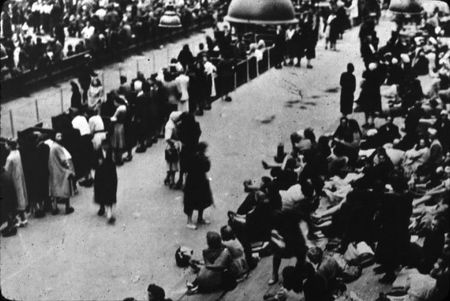
During the so-called “Vel d’Hiv” raid, which took place on July 16 and 17, 1942, the victims were held at the Vélodrome d’Hiver, a cycling stadium in Paris’s 15th arrondissement.

8,160 Jews, including more than 4,000 children, were locked up in the stadium in terrible sanitary conditions before being transported by train in cattle wagons to transit camps and deported. None of the children – who were all deported to Auschwitz – survived.

Although French police had already begun arresting both foreign and French Jews in 1941, the raids in July 1942 were the first ones in which women, children and the elderly were also taken, as the curator of the exhibition, Olivier Accarie Pierson, pointed out.

“Intelligence from the time shows that the population found the roundup shocking,” he told AFP.

“Many policemen had leaked the information the day before; the Germans were furious. They had hoped to arrest 27,427 Jews in and around Paris, but eventually they ‘only’ arrested 13,152,” he added.

This figure includes the arrests from a simultaneous round-up, during which nearly 5,000 adults were sent to the Drancy transit camp and deported.


French collaboration

The archives exhibited, some of them stamped “secret”, clearly show the French regime’s collaboration with the Nazi occupants, with notes giving the tally of people arrested.

“The Vichy regime’s official anti-Semitism and its policy of collaborating with the Third Reich, which planned the extermination of the Jews, led to the deportation first of foreign Jews, then of French Jews,” historian Jean-Pierre Azéma told AFP.

While many people probably had no idea of their fate, one young girl, Hélène Berr, shared her feelings of foreboding with her diary (one of the archival documents): “Something tragic is about to happen,” she wrote in an entry dated the day before the roundup. She later died in a camp.

But France only publicly acknowledged its role 53 years later. “These dark hours soil our history forever and are an insult to our past and our traditions. Yes, the French and the French state seconded the occupying powers in their criminal folly,” President Jacques Chirac said in a historic speech on July 16, 1995, at a commemoration ceremony.


Commemorations

The actual Vel d’Hiv building was razed in 1959 after a fire and there is now a commemorative monument on the site.

Besides the exhibition at the city hall of Paris’s 3rd arrondissement, other commemorations have been organised. The Sons and Daughters of Deported Jews of France organisation will hold a ceremony at the Vel d’Hiv monument on July 16. The same day, a ceremony will be held at the Mémorial de la Déportation in Bordeaux.

On July 22, an official ceremony will be held with President François Hollande at the Vel d’Hiv monument in Paris.


Sunday, December 4, 2011

'Human Zoos' go on show in Paris

Reported by: Joel Noe
Source: La Local, France
First Reported by: 


Monday, October 31, 2011


  October 31


Oct 31, 1492:
Protestant Reformation: Martin Luther posts his 95 theses on the door of the Castle Church in Wittenberg. 
 
On this day in 1517, the priest and scholar Martin Luther approaches the door of the Castle Church in Wittenberg, Germany, and nails a piece of paper to it containing the 95 revolutionary opinions that would begin the Protestant Reformation.

In his theses, Luther condemned the excesses and corruption of the Roman Catholic Church, especially the papal practice of asking payment—called "indulgences"—for the forgiveness of sins. At the time, a Dominican priest named Johann Tetzel, commissioned by the Archbishop of Mainz and Pope Leo X, was in the midst of a major fundraising campaign in Germany to finance the renovation of St. Peter's Basilica in Rome. Though Prince Frederick III the Wise had banned the sale of indulgences in Wittenberg, many church members traveled to purchase them. When they returned, they showed the pardons they had bought to Luther, claiming they no longer had to repent for their sins.

Luther's frustration with this practice led him to write the 95 Theses, which were quickly snapped up, translated from Latin into German and distributed widely. A copy made its way to Rome, and efforts began to convince Luther to change his tune. He refused to keep silent, however, and in 1521 Pope Leo X formally excommunicated Luther from the Catholic Church. That same year, Luther again refused to recant his writings before the Holy Roman Emperor Charles V of Germany, who issued the famous Edict of Worms declaring Luther an outlaw and a heretic and giving permission for anyone to kill him without consequence. Protected by Prince Frederick, Luther began working on a German translation of the Bible, a task that took 10 years to complete.

The term "Protestant" first appeared in 1529, when Charles V revoked a provision that allowed the ruler of each German state to choose whether they would enforce the Edict of Worms. A number of princes and other supporters of Luther issued a protest, declaring that their allegiance to God trumped their allegiance to the emperor. They became known to their opponents as Protestants; gradually this name came to apply to all who believed the Church should be reformed, even those outside Germany. By the time Luther died, of natural causes, in 1546, his revolutionary beliefs had formed the basis for the Protestant Reformation, which would over the next three centuries revolutionize Western civilization.


Wednesday, October 12, 2011


  October 12


Oct 12, 1492:
Columbus reaches the New World


After sailing across the Atlantic Ocean, Italian explorer Christopher Columbus sights a Bahamian island, believing he has reached East Asia. His expedition went ashore the same day and claimed the land for Isabella and Ferdinand of Spain, who sponsored his attempt to find a western ocean route to China, India, and the fabled gold and spice islands of Asia.

Columbus was born in Genoa, Italy, in 1451. Little is known of his early life, but he worked as a seaman and then a maritime entrepreneur. He became obsessed with the possibility of pioneering a western sea route to Cathay (China), India, and the gold and spice islands of Asia. At the time, Europeans knew no direct sea route to southern Asia, and the route via Egypt and the Red Sea was closed to Europeans by the Ottoman Empire, as were many land routes.

Contrary to popular legend, educated Europeans of Columbus' day did believe that the world was round, as argued by St. Isidore in the seventh century. However, Columbus, and most others, underestimated the world's size, calculating that East Asia must lie approximately where North America sits on the globe (they did not yet know that the Pacific Ocean existed).

With only the Atlantic Ocean, he thought, lying between Europe and the riches of the East Indies, Columbus met with King John II of Portugal and tried to persuade him to back his "Enterprise of the Indies," as he called his plan. He was rebuffed and went to Spain, where he was also rejected at least twice by King Ferdinand and Queen Isabella. However, after the Spanish conquest of the Moorish kingdom of Granada in January 1492, the Spanish monarchs, flush with victory, agreed to support his voyage.

On August 3, 1492, Columbus set sail from Palos, Spain, with three small ships, the Santa Maria, the Pinta, and the Nina. On October 12, the expedition reached land, probably Watling Island in the Bahamas. Later that month, Columbus sighted Cuba, which he thought was mainland China, and in December the expedition landed on Hispaniola, which Columbus thought might be Japan. He established a small colony there with 39 of his men. The explorer returned to Spain with gold, spices, and "Indian" captives in March 1493 and was received with the highest honors by the Spanish court. He was the first European to explore the Americas since the Vikings set up colonies in Greenland and Newfoundland in the 10th century.

During his lifetime, Columbus led a total of four expeditions to the New World, discovering various Caribbean islands, the Gulf of Mexico, and the South and Central American mainlands, but he never accomplished his original goal—a western ocean route to the great cities of Asia. Columbus died in Spain in 1506 without realizing the great scope of what he did achieve: He had discovered for Europe the New World, whose riches over the next century would help make Spain the wealthiest and most powerful nation on earth.